




Who, What, and Where: Business Check Details to Have Ready for Verification

📌 Key Takeaways
Business check preparation works best when businesses organize transaction details and confirm provider requirements before traveling.
- Prepare, Don’t Assume: The author recommends organizing check details beforehand because preparation cannot guarantee a provider will accept the check.
- Know Who Is Involved: Businesses should identify the payee, issuer, and person handling the transaction before visiting a provider.
- Review Check Details: The author recommends checking names, amounts, dates, reference details, and related business records before leaving the office.
- Confirm Provider Requirements: Providers may follow different rules, so the author recommends confirming current documents, limits, fees, and restrictions first.
- Keep Context With Checks: A short handoff note can help when someone other than the check recipient handles the transaction.
Preparation reduces avoidable delays, but providers make acceptance decisions.
Contractors and trade business owners can reduce avoidable disruptions, preparing them for the detailed who, what, and where guidance below.
~ ~ ~ ~ ~ ~ ~ ~ ~ ~ ~ ~ ~ ~ ~ ~ ~ ~
A contractor check is sitting on the desk, and your crew expects to get paid this week. Materials for the next job need to be ordered by Friday. Before you drive to a check-cashing provider, a five-minute review of the transaction details behind that check can prevent the kind of avoidable trip that puts payroll planning or a materials order on hold.
No online list can tell you exactly what a specific provider will ask for, because verification procedures vary. What you can do is organize the ordinary transaction information before you leave, so you can answer common questions without scrambling to reconstruct details on the spot. For Fredericksburg-area contractors and trade business owners, that small preparation step can be the difference between a smooth transaction and returning to the office for something that was already in the file.
The framework covers three categories: who is connected to the transaction, what to review on the check itself and in your records, and where to confirm provider-specific requirements before traveling.
Preparation Helps, but It Does Not Decide Whether a Check Is Accepted
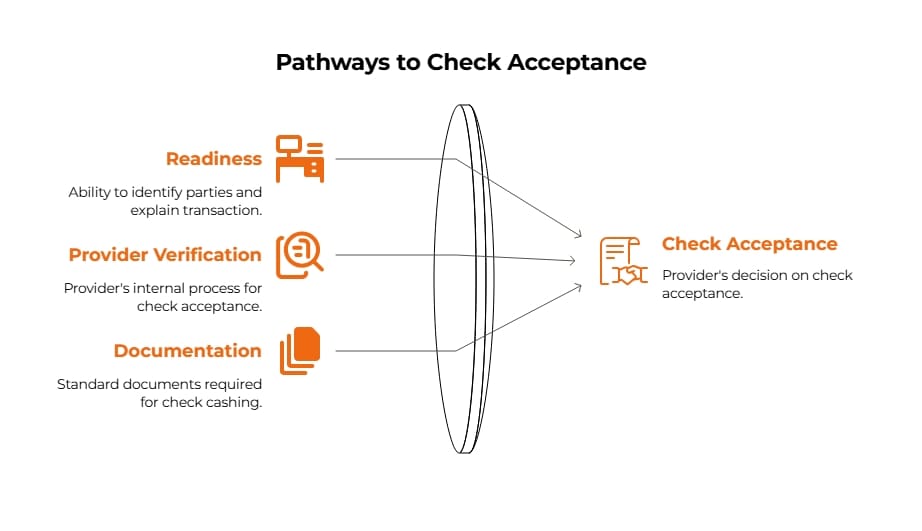
Before walking through the checklist, one distinction matters more than anything else.
Readiness means you can identify the parties on the check, explain the transaction behind it, and locate supporting records if someone asks for them. Provider verification is the provider’s own process for deciding whether to accept the check and under what conditions. Those are separate things.
Organizing your information makes it easier to respond to ordinary questions during a review. It does not override a provider’s policies, documentation requirements, or acceptance decisions. A provider may ask for documents not covered here, may decline a transaction for reasons unrelated to preparation, or may have procedures that change over time.
While specific requirements vary, providers often request standard documentation to prevent fraud. When organizing your file, it is helpful to know where to find items such as a valid government-issued photo ID, proof of business ownership or authorization (such as Articles of Organization or Articles of Incorporation), documentation confirming your Employer Identification Number (EIN), and a copy of your business registration or local business license. Because these items represent potential requests rather than a guaranteed universal checklist, always confirm the exact requirements directly with your provider before your visit.
DNV Cheques offers business check cashing at multiple locations. Contacting the provider before your visit is the fastest way to confirm specific requirements.
Who: Organize the People and Businesses Connected to the Check
Three parties typically appear in a business-check transaction, and being able to identify each one before you arrive saves time during a review.
The payee (the business receiving the funds). This is the name on the “pay to the order of” line. Confirm it matches what your business uses in its records. If the check was issued to a trade name, a DBA, or an abbreviated version of the legal business name, note which version appears and whether your records reflect the same name.
The issuer (the party that wrote the check). This is the company, organization, or individual whose name and account information appear on the check. Ensure you can connect the check to its corresponding invoice, job record, or contract.
The person handling the transaction. The individual presenting the check may be the owner, an office manager, a bookkeeper, or another representative. If someone other than the owner will handle the transaction, consider whether the business has existing information connecting that person to the business in case the provider asks about the relationship.
Contact or account information already in the business file. Know where payee or issuer contact details (phone numbers, account numbers) are stored in your files. A provider question is easier to answer when you can reference information the business already has on file.
For example, imagine a small framing contractor’s bookkeeper receives a check from a general contractor. The bookkeeper files it, but the owner plans to handle the transaction later that week. The useful preparation is making sure the owner knows the issuer’s name, the job the payment covers, and where the supporting records are stored.
What: Review the Check and the Transaction Details Before You Travel
Pick up the check and look at it before leaving the office. This is an organizational review, not a counterfeit detection process — the goal is to understand the payment being presented, not to perform your own financial verification. Several details are worth confirming while you still have easy access to your files.
Printed check details to review:
- Amount. Confirm that the written and numeric amounts match and that the figure aligns with the invoice or payment you expected.
- Date. Verify that the check is not post-dated (written with a future date) and that the date is recent enough to be relevant.
- Check number. Note it for your records so you can reference it if questions come up.
- Payee name. Confirm the spelling matches your business name or the name used for this type of transaction.
- Issuer name. Make sure you can identify who issued the check and connect it to a specific job, invoice, or payment.
- Third-party status. Check if the payment is a third-party check (a check written to someone else who then endorsed it over to your business). Many check-cashing providers strictly refuse two-party or third-party checks due to fraud risks.
- Memo or reference line. If the issuer included a job number, invoice number, or project reference, note it. That detail helps connect the check to a real transaction.
Supporting transaction records. If your business has an invoice, work order, job completion record, or payment note tied to this check, know where those records are stored. You may not need them, but locating the relevant file quickly is more useful than reconstructing details from memory if a provider asks.
The point is readiness, not obligation. Have relevant records accessible if useful or requested, not because any particular document is universally required. Do not change information on the check or assume that a particular endorsement method applies because it appeared in a generic article — if completing or presenting the check involves provider-specific instructions, confirm those instructions directly.
Where: Confirm the Provider-Specific Questions Before Leaving
The preparation above covers your side of the transaction. The provider’s side is a separate set of questions only the provider can answer. Before traveling, consider confirming:
- Does the provider have current requirements for business checks that differ from personal checks?
- Is there specific information or documentation the provider wants the business to have available for this type of transaction?
- Are there restrictions, limits, or procedures that apply to the check amount, issuer type, or business type?
- If fees, limits, or transaction timing matter to the business’s plans, where can you obtain current information?
- Has anything about the provider’s process or location details changed recently?
A short phone call or a visit to the provider’s website can answer most of these questions before you commit to the trip. DNV Cheques has a dedicated Fredericksburg location page with current contact information, and a general contact page for broader questions.
The goal is to avoid discovering a provider-specific requirement for the first time at the counter, when your crew is waiting on payroll or your supplier is waiting on a materials order.
Who / What / Where Business Check Readiness Checklist
| Category | What to Organize or Review | Guardrail |
|---|---|---|
| Who | Payee/business name on the check; issuer name on the check; person handling the transaction; existing information connecting that person to the business if relevant; contact or account details already in the business file | Do not assume a specific identity or authorization document is universally required |
| What | Amount, date, check number, payee/issuer spelling, memo or reference information; location of the corresponding invoice, job record, or payment note | Have relevant records accessible if useful or requested, not because any particular document is mandatory everywhere |
| Where | Provider name and location; current contact information; confirmed answers to provider-specific questions about documents, procedures, fees, limits, or restrictions | Provider answers control provider-specific requirements; preparation does not guarantee acceptance |
Use a Short Handoff Checklist When Someone Else Is Taking the Check
In many small trade businesses, the person who receives the check is not the person who takes it to the provider. A bookkeeper files it, an office manager organizes the records, and the owner handles the transaction days later. That separation can strip the check of the business context behind it.
A short internal handoff note closes that gap. Before passing the check along, include:
- Who issued the check and why the business received it.
- Where the supporting transaction records (invoice, job file, payment note) are stored.
- Which provider or location the business plans to use.
- Whether anyone has confirmed the provider’s current requirements for this transaction.
- Which provider-specific questions still need confirmation.
- Whom to contact internally if the provider asks a question the person handling the check cannot answer.
- Whether the check should remain unendorsed until the person reaches the counter (many providers require the endorsement to happen in front of their teller).
This note is not a provider requirement. It is an internal step that keeps the transaction context attached to the check so the person at the counter does not need to call back to the office.
Why Readiness Matters to Payroll, Materials, and Job Scheduling
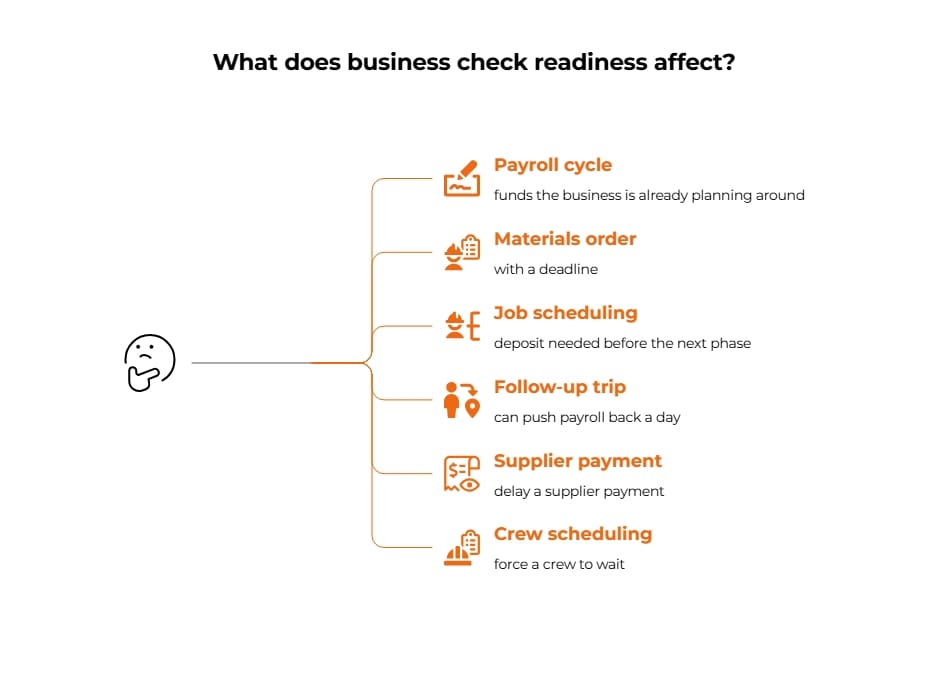
For a contractor or trade-business owner, a business check often represents funds the business is already planning around: a payroll cycle, a materials order with a deadline, or a deposit needed before the next phase of a job can start.
When a transaction stalls because basic information was not organized or provider requirements were not confirmed beforehand, the disruption extends beyond the counter. An avoidable follow-up trip can push payroll back a day, delay a supplier payment, or force a crew to wait on a scheduling decision that depended on confirmed funds.
Imagine a hypothetical plumbing contractor who expects a vendor check to cover a materials order due Thursday. If the office manager confirms the provider’s current requirements on Tuesday and organizes the transaction details that afternoon, the business can plan around a realistic timeline. If no one confirms requirements until arrival on Wednesday and the provider needs something not on hand, the materials order slips and the Thursday job may need rescheduling.
Preparation cannot ensure that a provider will complete a transaction within a particular period. Organizing the information within your control, and confirming the provider’s current requirements before building plans around a specific timeline, reduces the chance that a simple gap creates unnecessary operational pressure.
Frequently Asked Questions
What information should be reviewed on a business check before visiting a provider?
Review the payee/business name, issuer name, date, amount, check number, and any memo or reference information on the check. Also confirm your business can locate the corresponding invoice, job record, or payment note if questions arise. This is preparation guidance, not a universal provider-document list.
Do all business check-cashing providers require the same information?
No. Providers may have different verification procedures, documentation expectations, and acceptance criteria. Confirm the specific provider’s current requirements before traveling rather than assuming a generic checklist applies everywhere.
Does having the right information guarantee that a business check will be accepted?
No. Organized information can help you respond to ordinary transaction questions during a review, but it does not guarantee acceptance or complete a provider’s verification process. Acceptance decisions remain with the provider.
Should a business contact the provider before traveling?
When the provider’s current requirements are unclear, confirming expectations before the trip is a practical step. A phone call or visit to the provider’s website can clarify what to have available and whether any restrictions apply.
Organize the Details You Control, Then Confirm What You Cannot
The useful preparation fits in a few minutes: identify the parties on the check, review the printed details, know where your transaction records are stored, and confirm the provider’s current requirements before making plans around a specific timeline. If someone else will handle the transaction, attach a handoff note so the business context travels with the check.
Before traveling, confirm the provider’s current business-check requirements. You can review the DNV Cheques Fredericksburg location page for current visit information or find a location closer to your business.
Disclaimer: This article is for general informational purposes only and does not constitute financial, investment, tax, accounting, legal, or insurance advice. Readers should consult a qualified professional before making decisions based on their circumstances.
Our Editorial Process:
Every piece is researched, written, and reviewed by our Insights Team to ensure accuracy, clarity, and practical value for the communities we serve.
About the DNV Cheques Insights Team:
The DNV Cheques Insights Team creates clear, helpful guides for our customers. While our content is thoroughly reviewed for accuracy, it is for informational purposes and should not replace direct confirmation with your local branch.