




Business Check Cashing Requirements in Fredericksburg: A Contractor and Vendor Readiness Guide
📌 Key Takeaways
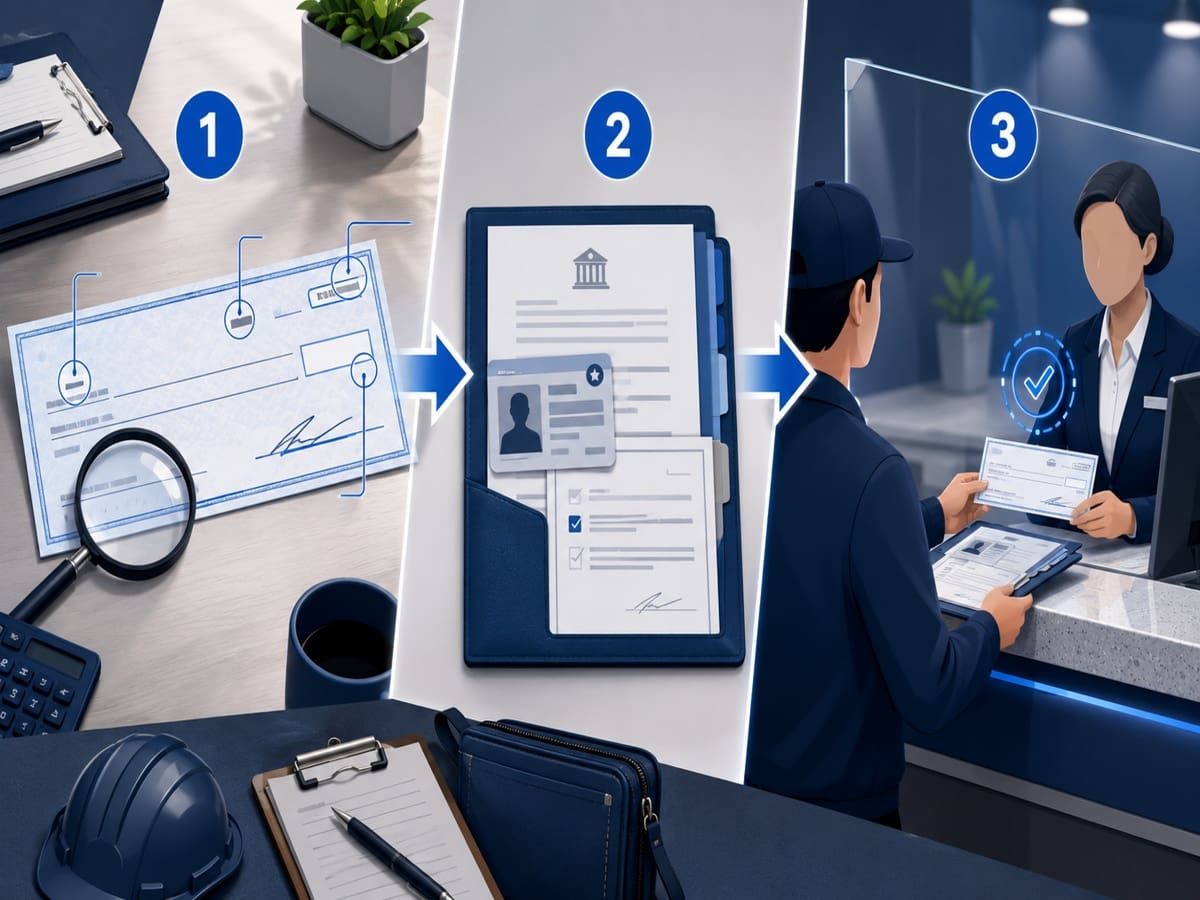
Contractors should review the check, organize business records, and confirm provider-specific rules before traveling to cash a business check.
- Separate Requirement Types: General preparation, provider policies, and Virginia rules differ, so the same checklist does not apply everywhere.
- Confirm Provider Rules: The author recommends confirming accepted ID, business records, authorization, endorsements, fees, limits, verification, and hours before traveling.
- Check Business Names: The author recommends checking the payee against legal or trade names and organizing records that explain any mismatch.
- Plan Around Verification: The author advises treating expected funds as unavailable until the transaction finishes, especially when business expenses depend on them.
- Preparation Is Not Approval: Preparation can reduce delays, but acceptance still depends on provider policies, verification, the check, and transaction circumstances.
Prepare first, confirm requirements, and avoid assumptions.
Fredericksburg contractors and vendors will reduce avoidable delays by using the readiness steps and provider questions that follow below.
~ ~ ~ ~ ~ ~ ~ ~ ~ ~ ~ ~ ~ ~ ~ ~ ~ ~
A contractor with a perfectly legitimate business check can still run into questions at the counter. The payee name might not match the trade name on the truck. The person presenting the check might be a bookkeeper, not the owner. The provider might request a document nobody thought to bring.
“Requirements” can mean several different things. Some preparation steps are general. Others depend entirely on the provider’s internal policy. A smaller set comes from Virginia law. Treating all three as one checklist leads to overconfidence or unnecessary confusion. This guide separates them so you can prepare what is within your control, identify what must be confirmed with the provider, and understand the narrow regulatory context that applies in Fredericksburg, Virginia.
Business Check “Requirements” Fall Into Three Different Categories
Before reviewing any specific document, recognize that “requirements” covers three distinct layers.
| Category | What It Means |
|---|---|
| General transaction preparation | Reviewing the check, organizing relevant business information, and having a current government-issued identification available |
| Provider-specific requirements | Policies a particular check-cashing business applies to a given transaction, covering accepted identification, required business records, authorization rules, endorsement instructions, transaction limits, fees, and verification procedures |
| Virginia regulatory obligations | Rules that apply to the check casher rather than directly to you, but that shape the transaction |
General transaction preparation: Reviewing the check, organizing relevant business information, and having a current government-issued identification available. These steps reduce avoidable friction regardless of which provider you visit.
Provider-specific requirements: The policies a particular check-cashing business applies to a given transaction, covering accepted identification, required business records, authorization rules, endorsement instructions, transaction limits, fees, and verification procedures. Provider policies can differ and are not always published in full online.
Virginia regulatory obligations: Rules that apply to the check casher rather than directly to you, but that shape the transaction. Under Virginia law (Title 6.2, Chapter 21 of the Code of Virginia), covered check cashers must register with the State Corporation Commission. Virginia’s recordkeeping statute, Va. Code § 6.2-2107, requires registrants to record specified information from the check and from an identification document presented by the customer. That statute tells you something about what the provider will record, but it does not establish every document that every provider will request before cashing your check.
Keeping these three layers separate is the most useful thing you can do before making the trip.
Review the Business Check Before You Travel
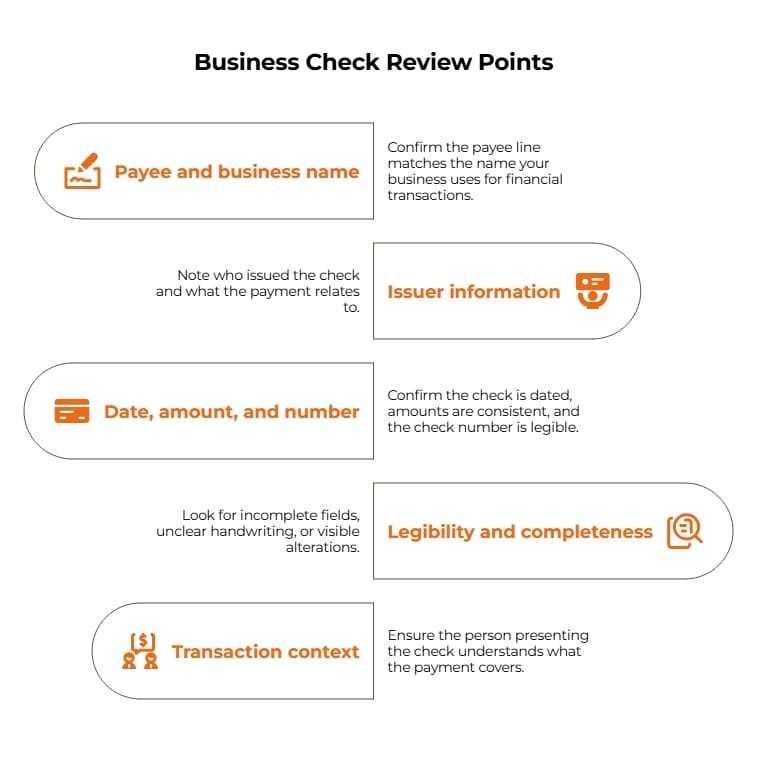
Start with the check itself. A few minutes of review can surface issues worth resolving before you arrive.
Payee and business name. Confirm that the payee line matches the name your business uses for financial transactions. Contractors frequently operate under a trade name (sometimes called a DBA) while the check is issued to the legal entity name, or vice versa. Recognizing the discrepancy in advance lets you ask the provider what supporting documentation, if any, it requires to connect the two names.
Consider a hypothetical example: a Fredericksburg-area remodeling contractor invoices clients under the trade name “Riverfront Renovations,” but the business is legally registered as “J. Torres Construction LLC.” A general contractor issues payment to the legal name. The payee reads “J. Torres Construction LLC,” which is correct, but a provider unfamiliar with the business might ask how “Riverfront Renovations” connects to that entity. For example, you might bring a recent printout from the Virginia SCC displaying your LLC’s active status, or a copy of your fictitious name certificate filed with the local Fredericksburg circuit court. Identifying the question before traveling (and organizing a trade-name filing or formation document that shows the connection) turns a potential counter delay into a resolved item.
Issuer information. Note who issued the check and what the payment relates to. If the provider asks questions during verification, having this context readily available keeps the process moving. This becomes especially useful when an office manager or another employee is presenting a check that an owner originally received.
Date, amount, and check number. Confirm the check is dated, that any written and numeric amounts are consistent, and that a check number is present and legible.
Legibility and completeness. Look for incomplete fields, unclear handwriting, or visible alterations. None of these automatically disqualifies a check, but any of them may prompt additional questions from the provider. Do not assume that any single irregularity automatically makes the check unacceptable unless the intended provider confirms that point.
Transaction context. Make sure the person who will present the check understands what the payment covers. If a bookkeeper or office manager is handling the transaction on behalf of the owner, that person should be able to answer basic questions about the check’s origin and purpose.
Prepare Identification and Business Information Without Treating It as a Universal Checklist
The most common question is some version of “what do I need to bring?” No single online list can substitute for the provider’s own current requirements. What follows is preparation guidance, not a universal acceptance checklist.
Government-issued identification. Virginia’s recordkeeping statute (Va. Code § 6.2-2107) addresses information recorded from an identification document presented by the customer and defines several categories of government-issued identification. Having a current, valid government-issued photo ID available is a practical baseline. The specific types a particular provider accepts under its own policy should be confirmed before you travel.
Business identity information. Depending on the provider, they may ask you to present records connecting you (or the person presenting the check) to the business named on the payee line. Potential items to ask about include business registration or formation documents, documentation linking a trade name to the legal entity, or records showing an authorized representative’s relationship to the business. These are items to inquire about, not items to assume every provider requests.
Authorization for representatives. If someone other than the business owner will handle the transaction, the provider may have specific authorization requirements. The scope (a letter, a corporate resolution, a power of attorney, or something else) is a provider-level decision that should be confirmed in advance.
Endorsement instructions. How the check should be endorsed, and by whom, can vary by provider. Asking before signing avoids having to correct an endorsement at the counter.
The underlying principle is straightforward: organize everything that might be relevant, then confirm with the provider which items actually apply to your transaction. In particular, identify situations that are most likely to require clarification before you arrive:
- A difference between the legal business name and the payee name on the check
- A representative presenting the check instead of the business owner
- Questions about how the check should be endorsed and whether endorsement should happen before or at the time of the transaction
- Any additional business identity information the provider requests for this type of check
Confirm These Provider-Specific Questions Before Making the Trip
A short phone call or a review of the provider’s published information is the single most effective preparation step. Consider confirming these questions with your intended Fredericksburg provider before traveling.
- Which forms of identification does the provider accept?
- Does the provider require any business records for this type of payee or check?
- Can someone other than the business owner present the check? If so, what authorization does that person need?
- How should the check be endorsed, and should endorsement happen before or at the time of the transaction?
- Are there current transaction limits for business checks?
- What fees apply to this transaction type and amount?
- Does the provider independently verify the issuer, and if so, could that verification add processing time?
- Is any additional review possible for this check type or amount?
- What are the provider’s current hours and location details?
Phrase these as preparation questions, not as implied requirements. The answers may change over time, so confirming them close to the date of your visit gives you the most reliable information.
A hypothetical scenario shows why this matters: imagine a bookkeeper at a small plumbing company is asked to take a business check to a Fredericksburg provider while the owner is on a job site. The bookkeeper has the check and a personal ID but has never confirmed whether the provider allows a non-owner representative to present a business check. Without that confirmation, the bookkeeper may arrive only to learn that written authorization from the business owner is required. A two-minute phone call before leaving the office would have resolved the question or redirected the task to the owner.
Plan Payroll, Materials, and Job Timing Around Verification Uncertainty
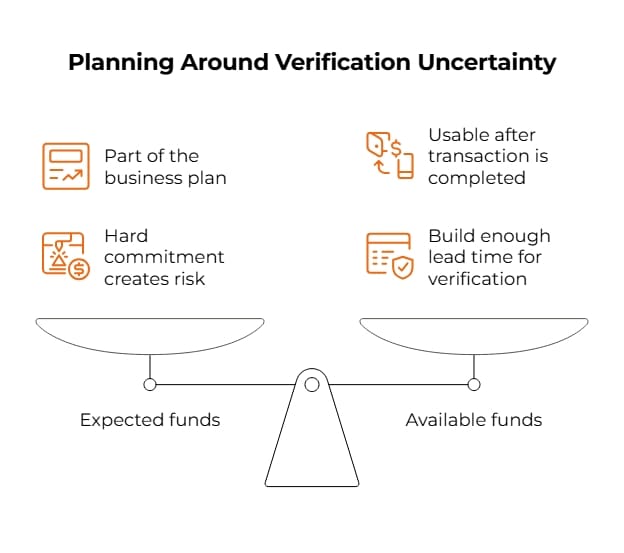
A business check that funds a payroll run, a materials purchase, or a time-sensitive subcontractor payment carries operational weight beyond the transaction itself. Building a hard commitment around the assumption that the check will be cashed on a specific timeline creates risk.
Suppose a hypothetical HVAC contractor receives a business check on a Tuesday morning and plans to use those funds to purchase equipment from a supply house that same afternoon. If verification takes longer than expected, or if additional review is required for that check type, the purchase window closes and the scheduled installation slips. The contractor did not make a preparation mistake; the mistake was treating expected funds as available funds before the transaction was confirmed.
Where possible, separate expected funds from available funds in your day-of planning. Expected funds may be part of the business plan; available funds are what the business can actually use after the transaction has been completed. If payroll depends on this check clearing, build enough lead time for verification that may take longer than anticipated. Advertising that emphasizes fast service should not be interpreted as a guarantee that every business check will complete verification within a particular period.
Decide in advance who within the business is responsible for answering provider questions. If the bookkeeper presents the check but the owner holds the relevant business records, that gap can slow the process. Keep issuer and payment context accessible to whoever handles the transaction.
Contractor and Vendor Business Check Readiness Checklist
Use this as a preparation guide, not as a guarantee that a provider will cash the check. The left column covers items you can review and organize independently. The right column covers items that depend on the provider’s current policy and should be confirmed before traveling.
| Prepare and Review on Your Own | Confirm With the Provider |
|---|---|
| Check payee name matches your business name (legal or trade) | Which identification types are accepted |
| Identify legal name and trade name differences | What business documentation is requested |
| Issuer name and payment context are clear | Whether a non-owner representative can present the check |
| Date, amount, and check number are present and legible | What authorization that representative would need |
| No obvious alterations or incomplete fields | Endorsement instructions |
| Relevant business identity records are organized and accessible | Current fees and transaction limits |
| Current government-issued identification is available | Verification process and expected timing |
| The person handling the transaction can answer basic questions about the check | Any provider-specific restrictions for this check type |
| Keep relevant issuer information accessible | Current location and operating hours |
| Internal responsibility for provider communication is assigned |
Confirm the current business-check requirements with your intended provider before traveling.
Frequently Asked Questions
What should a contractor prepare before taking a business check to a Fredericksburg provider?
Have the check, a current government-issued photo ID, and relevant business identity records organized before you leave. Then confirm the intended provider’s specific requirements by phone or through their published information, since provider policies can vary.
Does Virginia law establish one universal business-check cashing document checklist for customers?
The sources reviewed for this guide establish no universal customer checklist. Virginia law imposes registration and recordkeeping obligations on check cashers, including recording information from checks and identification documents presented by customers (Code of Virginia § 6.2-2107). Provider-specific business-document requirements are separate and should be confirmed directly.
How can a business verify whether a Virginia check casher is registered?
The Virginia State Corporation Commission maintains a Company Search tool through its Bureau of Financial Institutions that includes check cashers registered under Chapter 21. You can use this resource to look up the regulatory status of a specific provider before visiting. A provider’s current status should be verified through the SCC rather than inferred from advertising or other business marketing.
Does preparing everything in advance guarantee the check will be cashed?
No. Preparation reduces avoidable uncertainty, but acceptance depends on the provider’s review, its current policies, the check itself, and the circumstances of the transaction. Preparation puts you in a stronger position; it does not eliminate every variable.
Moving Forward With Confidence, Not Assumptions
The difference between a smooth transaction and an unnecessary trip often comes down to one distinction: knowing what you can prepare versus what you need to confirm. Review the check, organize your identification and business records, and verify the provider’s current requirements before you travel.
Disclaimer: This article is for general informational purposes only and does not constitute financial, investment, tax, accounting, legal, or insurance advice. Readers should consult a qualified professional before making decisions based on their circumstances.
Our Editorial Process:
Every piece is researched, written, and reviewed by our Insights Team to ensure accuracy, clarity, and practical value for the communities we serve.
About the DNV Cheques Insights Team:
The DNV Cheques Insights Team creates clear, helpful guides for our customers. While our content is thoroughly reviewed for accuracy, it is for informational purposes and should not replace direct confirmation with your local branch.